CURRENT EXHIBITIONS
Where Do I Go? لوين روح by Rania Matar
March 27 – May 31
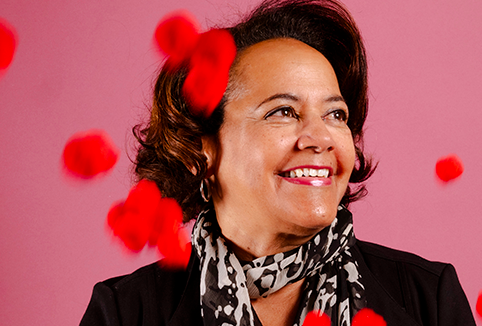
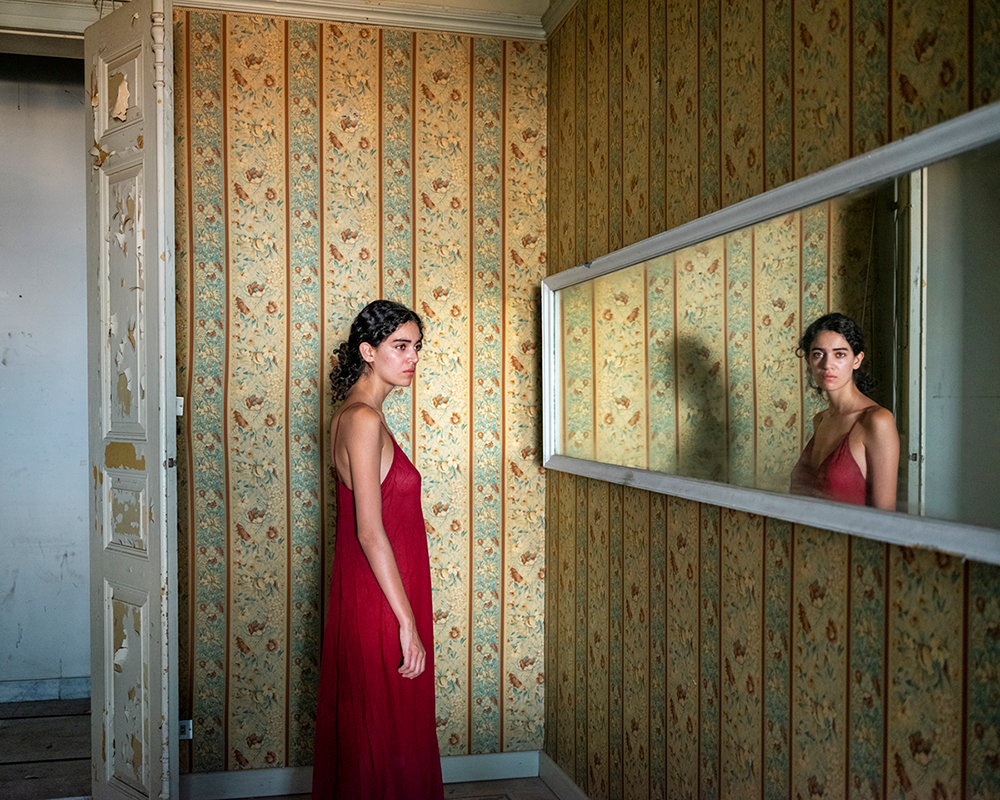
Where Do I Go? لوينروح is Rania Matar’s photographic love letter to the women of Lebanon.
2025 marked the fiftieth anniversary of the Lebanese Civil War. As the country and its people reckoned with the legacy of its past, they also confronted the struggles of the present— economic instability, lingering reminders of the pandemic, undue violence across the region, and for many, the enduring pain of the Beirut Port Explosion. The precarity has led many to emigrate elsewhere.
2025 marked the fiftieth anniversary of the Lebanese Civil War. As the country and its people reckoned with the legacy of its past, they also confronted the struggles of the present— economic instability, lingering reminders of the pandemic, undue violence across the region, and for many, the enduring pain of the Beirut Port Explosion. The precarity has led many to emigrate elsewhere.
Through it all, Matar has found hope and inspiration in Lebanon’s young women. Having left Lebanon during the Civil War in 1984, she knows well the difficult decision of whether to leave or to stay.
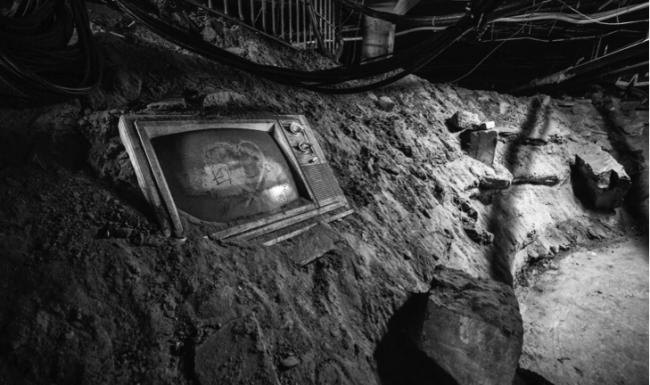
Her arresting portraits affirm the presence, strength, and resilience of her subjects. Whether situated in an abandoned building or within the country’s natural landscape, history, place, and identity become one in her images. The women’s presence exudes out of the frame, claiming space— asking their audience to look at them, and to answer Where Do I Go?
Join us for the opening reception of this exhibition at the Leica Gallery Boston on Thursday, April 9th from 6-8PM. Register to attend.
Join us for an artist talk with Rania on Wednesday, May 20th from 5-7PM. Register to attend.
The exhibition will be on view from March 27th through May 31st. Where Do I Go? لوينروح Is being mounted in collaboration with Robert Klein Gallery.
UPCOMING EXHIBITIONS
Living with Aids by Sal Lopes
June 4 – August 9
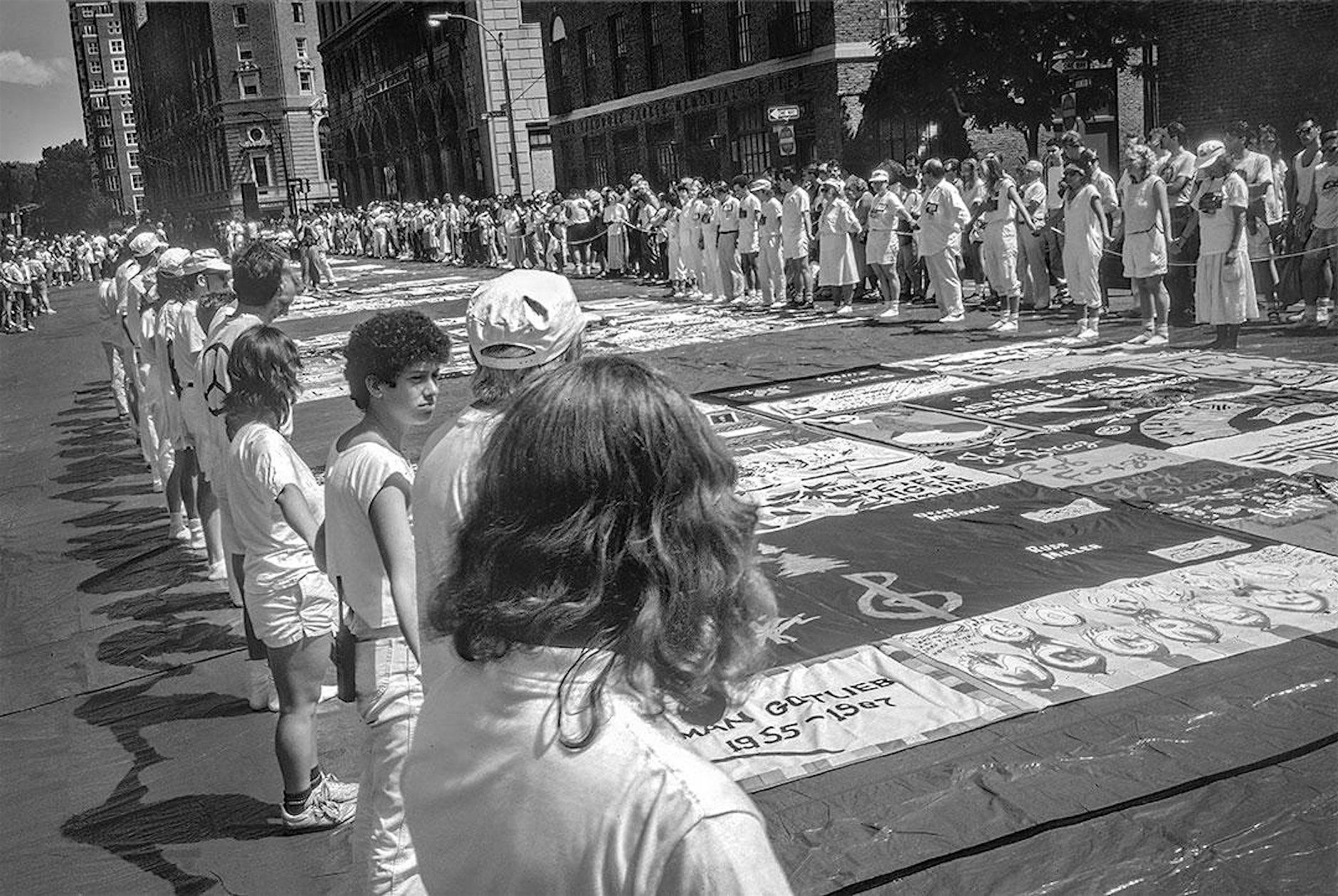
In Living with AIDS, photographer Sal Lopes explores how the city of Boston was affected by the AIDS Crisis. From 1988 to 1992, Lopes traced three interconnected stories— the NAMES Project AIDS Quilt and its display in both Boston and Washington D.C.; the Buddy Program, run by the AIDS Action Committee of Massachusetts, which offered volunteer support to those living with AIDS; and the Boyce family, whose child Brianna was living with AIDS.
After spending the 1980s documenting Vietnam War veterans and the Vietnam Memorial in Washington D.C., Lopes was touched by the grief and mourning of those who had lost their lives or loved ones to AIDS. He began his documentation first with the AIDS quilt. Assembled by the NAMES Project, each of the quilt’s individual squares commemorated a single life lost, offering loved ones the space to honor those who had passed, express their grief, and come together.
The photographs made of the quilt in Boston are especially poignant as they are situated a short distance from where this gallery would come to stand on Arlington St. Other landmarks in the images—the Saunders castle, Our Lady of Victories Church, and the Park Plaza—allow one to visualize how close this history really is and how profoundly our community was affected by it.
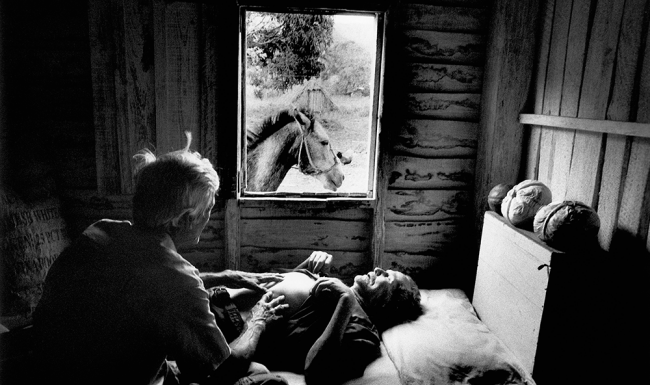
Another way Bostonians came together in this time was with the Buddy Program. The initiative provided intensive training for volunteers to offer long-term support and empathy once assigned to a ‘buddy’ living with AIDS. Lopes was accepted into the buddy training program, and the experience earned him the trust and respect within the community needed for the project. The images from this portion of the project reveal the different relationships between buddies; some grew into love, important friendships, and, for many, loss.
Lopes’s images of the Boyce family follow a similar suit. Parents John and Sharon Boyce adopted four children, Brian and Felicia who were living with HIV antibodies, their sister Brianna who had AIDS, and their brother Jeremy. Often, these images show mundane moments that could be shared by any family, such as Brianna playing with her siblings or caring for her pet bird. Others reveal Brianna’s bravery and the reality of her condition: medication being administered, cleaning her catheter, an IV being placed. Yet despite their situation, all the images contain an unyielding sense of love, from both the Boyce’s within the frame and Lopes through his lens.
It is important to sit with these images today as the face of AIDS has shifted in the nearly 40 years since these photographs were made. Now, someone diagnosed with HIV can expect to live a healthy life due to innovations in treatment and care. For those who did not live through the epidemic, it can be difficult to comprehend the scale of what was lost. Lopes has created a powerful visual record, allowing one to witness how the people of Boston came together. His photographs explore compassion, grief, strength, and hope, all while empowering his subjects—truly showing how people lived with AIDS.